
Politics
MIN OF CULTURE R. DATI PAYS TRIBUTE TO ICONIC FRENCH RAP SINGER CALBO WHO DIED
ALSO RUNNING FOR PARIS MAYOR SEAT

Cabo Iconic Rap Singer Arsenik (Source: Facebook)
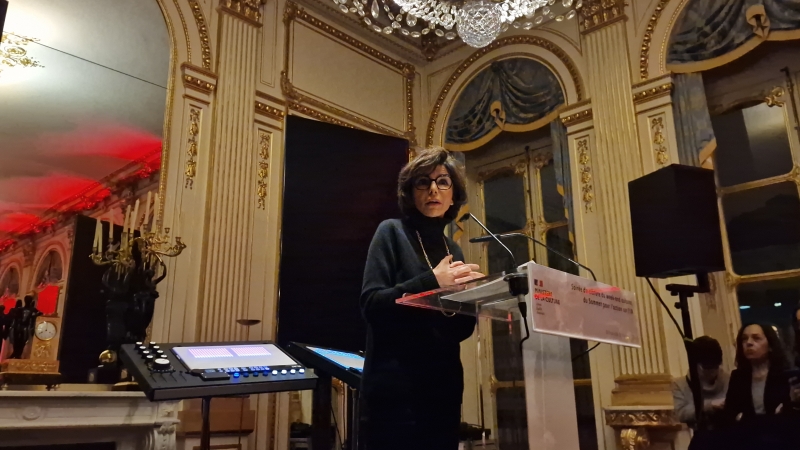
Minister of Culture Rachida Dati
(Source: Rahma Sophia rachdi Jedi Foster)
(Source: Rahma Sophia rachdi Jedi Foster)
RACHIDA DATI AND CALBO: WHO THEY ARE AND WHERE THEY ARE COMING FROM
Rachida Dati, born in 1965 in Saint Remy to a Moroccan father and an Algerian mother, grew up in a modest family before becoming a magistrate and then entering national politics alongside Nicolas Sarkozy. She served as Minister of Justice from 2007 to 2009, later as a Member of the European Parliament (2009–2019), and has been mayor of Paris’s 7?? arrondissement since 2008; since January 2024 she has been Minister of Culture and is now actively campaigning to become the next mayor of Paris, making her a political icon and role model for many young people from immigrant backgrounds
Rachida Dati, born in 1965 in Saint Remy to a Moroccan father and an Algerian mother, grew up in a modest family before becoming a magistrate and then entering national politics alongside Nicolas Sarkozy. She served as Minister of Justice from 2007 to 2009, later as a Member of the European Parliament (2009–2019), and has been mayor of Paris’s 7?? arrondissement since 2008; since January 2024 she has been Minister of Culture and is now actively campaigning to become the next mayor of Paris, making her a political icon and role model for many young people from immigrant backgrounds
CALBONY MBANI (CALBO) CO-FOUNDED ARSENIK LEGENDARY RAP GROUP
Calbony M’Bani, known as Calbo, was born in 1973 in Villiers le Bel and became famous as co founder, with his brother Lino, of the legendary rap group Ärsenik, a flagship act of the Secteur Ä collective. Through albums such as “Quelques gouttes suffisent…” and his involvement in projects like Bisso Na Bisso, he helped shape the first “golden age” of French rap, bringing together sharp social commentary, literary ambition and strong political symbolism, notably during the historic Olympia concerts in 1998 marking the 150?? anniversary of the abolition of slavery.
Calbony M’Bani, known as Calbo, was born in 1973 in Villiers le Bel and became famous as co founder, with his brother Lino, of the legendary rap group Ärsenik, a flagship act of the Secteur Ä collective. Through albums such as “Quelques gouttes suffisent…” and his involvement in projects like Bisso Na Bisso, he helped shape the first “golden age” of French rap, bringing together sharp social commentary, literary ambition and strong political symbolism, notably during the historic Olympia concerts in 1998 marking the 150?? anniversary of the abolition of slavery.
The minister Dati’s statement resonates with the broader place of French “trap” and rap today: genres that give voice to the anger, hopes and contradictions of youth in the banlieues, much like American rap has done in the United States. Contemporary French trap, with its heavy beats and raw lyrics, has become a powerful outlet for social frustration and identity affirmation, echoing the realities of precarious housing, police relations and discrimination while also feeding mainstream charts and cultural debates.
THE TRIBUTE BY MINISTER OF CULTURE RACHIDA DATI (FULL TEXT AS IT WAS DELIVERED, PRESS RELEASE)
Here is the tribute by the Minister of Culture, rendered faithfully in English while preserving its content and structure, Paris, 5 January 2026
Tribute by Ms Rachida Dati, Minister of Culture, to Mr Calbony M’Bani, known as Calbo "An emblematic voice of French rap, Calbony M’BANI, known as Calbo, passed away on 4 January 2026. Co founder, with his brother Lino, of the group Arsenik, he leaves the memory of an artist whose deep voice and sharp pen profoundly marked the history of French music.
Born in Villiers le Bel in 1973, Calbo founded the group Ärsenik with his brother in 1991. At a time when French rap was still seeking artistic legitimacy, the duo established itself through a distinctive approach, laying the foundations of a genuine school of writing. In 1998, their first album, Quelques gouttes suffisent…, had the effect of a shock wave.
Here is the tribute by the Minister of Culture, rendered faithfully in English while preserving its content and structure, Paris, 5 January 2026
Tribute by Ms Rachida Dati, Minister of Culture, to Mr Calbony M’Bani, known as Calbo "An emblematic voice of French rap, Calbony M’BANI, known as Calbo, passed away on 4 January 2026. Co founder, with his brother Lino, of the group Arsenik, he leaves the memory of an artist whose deep voice and sharp pen profoundly marked the history of French music.
Born in Villiers le Bel in 1973, Calbo founded the group Ärsenik with his brother in 1991. At a time when French rap was still seeking artistic legitimacy, the duo established itself through a distinctive approach, laying the foundations of a genuine school of writing. In 1998, their first album, Quelques gouttes suffisent…, had the effect of a shock wave.
Certified double gold in 1999, it definitively entered the history of French rap. Tracks such as Boxe avec les mots or Shalom revealed the group’s virtuosity and their love of the French language, handling multisyllabic rhymes and metaphors without ever losing their grounding in reality.
A member of the collective Secteur A, Arsenik took part in two historic concerts at the Olympia in May 1998, organised to celebrate the 150?? anniversary of the abolition of slavery, thus affirming the political dimension that ran through their work. Calbo was also involved in the collective Bisso Na Bisso, demonstrating his commitment to promoting African music and dialogue between cultures.
Beyond music, Calbo embodied a certain idea of rap: that of an art that is committed, lucid and uncompromising. Deeply convinced of the importance of transmission, Calbo created the association Özer in 2020. He travelled across France to lead writing workshops for young people, in working class neighbourhoods as well as in prisons, helping to create social ties and to spark vocations.
A member of the collective Secteur A, Arsenik took part in two historic concerts at the Olympia in May 1998, organised to celebrate the 150?? anniversary of the abolition of slavery, thus affirming the political dimension that ran through their work. Calbo was also involved in the collective Bisso Na Bisso, demonstrating his commitment to promoting African music and dialogue between cultures.
Beyond music, Calbo embodied a certain idea of rap: that of an art that is committed, lucid and uncompromising. Deeply convinced of the importance of transmission, Calbo created the association Özer in 2020. He travelled across France to lead writing workshops for young people, in working class neighbourhoods as well as in prisons, helping to create social ties and to spark vocations.
With Arsenik, Calbo paved the way for an entire generation of artists, showing that literary rigour and authenticity could reinforce one another. Through his refusal of compromise and his generosity, he helped make rap a fully fledged artistic genre. His voice and his lyrics will remain, for a whole generation, a source of inspiration, discipline and commitment.
I extend my sincerest condolences to his family, to his brother Lino, to his loved ones, and to the entire French rap community, which has lost one of its pillars." Statement by Rachida Dati, Minister of Culture
I extend my sincerest condolences to his family, to his brother Lino, to his loved ones, and to the entire French rap community, which has lost one of its pillars." Statement by Rachida Dati, Minister of Culture
RAP & TRAP AS VOICES OF THE BANLIEUES
The homage underlines how Calbo’s writing and voice helped structure an “école d’écriture” in French rap, where complex rhymes and metaphors coexist with a stark description of everyday life in working class neighbourhoods. This approach paved the way for subsequent waves of artists, including today’s trap generation, who mix melodic refrains, drill influenced production and often brutal storytelling to express anger, pride and frustration in the face of social exclusion, police tension and economic hardship.
The homage underlines how Calbo’s writing and voice helped structure an “école d’écriture” in French rap, where complex rhymes and metaphors coexist with a stark description of everyday life in working class neighbourhoods. This approach paved the way for subsequent waves of artists, including today’s trap generation, who mix melodic refrains, drill influenced production and often brutal storytelling to express anger, pride and frustration in the face of social exclusion, police tension and economic hardship.
Like American rap before it, French trap has become both a commercial phenomenon and a contested social mirror, accused of glorifying violence yet also recognised as one of the rare spaces where the experience of the banlieues is narrated from within. In this landscape, Calbo and Arsenik represent a foundational moment: they proved that demanding writing, political awareness and popular success could coexist, and that voices from the margins could reshape the cultural centre.
A POLITICAL & CULTURAL SYMBOL
By paying tribute to Calbo in such terms, Rachida Dati, herself a symbol of social ascent and political power for many young people of immigrant origin, acknowledges rap as a central component of contemporary French culture. Her homage recognizes not only a key artist but also the role of rap and trap as spaces of expression, transmission and dignity for generations raised in the housing estates and suburbs of France. Source (Ministry Culture, Wikipedia, Our reporter covering the Ministry as our correspondent in France)
By paying tribute to Calbo in such terms, Rachida Dati, herself a symbol of social ascent and political power for many young people of immigrant origin, acknowledges rap as a central component of contemporary French culture. Her homage recognizes not only a key artist but also the role of rap and trap as spaces of expression, transmission and dignity for generations raised in the housing estates and suburbs of France. Source (Ministry Culture, Wikipedia, Our reporter covering the Ministry as our correspondent in France)
Liability for this article lies with the author, who also holds the copyright. Editorial content from USPA may be quoted on other websites as long as the quote comprises no more than 5% of the entire text, is marked as such and the source is named (via hyperlink).